

Introduction
When you first enter the world of legal studies, one question naturally comes to mind: “What exactly is law?”
Law is not just about courtrooms, police, lawyers, or big books full of rules. It is something much wider and much more important. Law shapes how our society operates, influences the behavior of its members, and ensures the maintenance of peace and order.
This simple guide will help new students understand the meaning of law, its purpose, and how it operates in daily life.

What Is Law?
In the simplest words, law is a set of rules created by the government to guide and control the behaviour of people living in a society.
These rules tell us what we should do and what we should not do. If someone breaks a law, there may be punishment, a fine, or another legal consequence.
But law is more than just commands and punishments. It reflects the values of the society—justice, equality, freedom, and safety.
Different scholars have defined law in different ways:
According to Austin, law is “a command of the sovereign backed by sanctions.”
According to Salmond, law is “the body of rules recognized and applied by the state in the administration of justice.”
Importance of the Rule of Law in a Democratic Society
The idea of the Rule of Law is one of the most important foundations of any democratic nation. It means that everyone—citizens, government officials, and leaders—must obey the law. No one is above the law, and all decisions must be taken according to legal rules, not personal wishes. For new law students, understanding the Rule of Law is essential because it explains how fairness, justice, and equality are protected in society.
A democratic country cannot function properly without the Rule of Law. This principle ensures that power is not misused. If the government or any authority could act without legal limits, citizens would live in fear and insecurity. The Rule of Law provides a clear boundary by stating that all actions must have legal authority. For example, the police cannot arrest a person without following legal procedures, and the government cannot take away someone’s property without giving a valid reason and compensation. These protections create trust between citizens and the system.
One of the key features of the Rule of Law is equality before the law. This means every person, regardless of wealth, caste, religion, gender, or status, is treated equally in the eyes of the law. A rich businessperson and a poor labourer must face the same legal process for the same offence. This equality gives citizens confidence that justice will be fair. It also prevents discrimination and helps build a society where rights and dignity are respected.
Another important part of the Rule of Law is legal certainty. Citizens should know what the law is, how it works, and what consequences they will face if they break it. Laws must be clear, public, and stable. If rules keep changing suddenly or are applied differently to different people, then society becomes unpredictable and unfair. A stable legal system helps people plan their lives, businesses, and decisions with confidence.
The Rule of Law also protects fundamental rights. These include the right to freedom, equality, education, and personal liberty. Without Rule of Law, these rights could be taken away easily. For example, freedom of speech allows citizens to express opinions, even if they criticise the government. The law ensures that such rights are protected and that authorities cannot punish people without lawful reasons.
An independent judiciary is another essential element of the Rule of Law. Courts work as a safeguard against misuse of power. If the government or any individual violates someone’s rights, the courts can intervene and provide protection. Judges must be free from political pressure so they can make decisions based on justice and legal principles.
Finally, the Rule of Law promotes accountability. Everyone, including leaders and officials, must answer for their actions. If someone misuses public funds or violates official duties, the legal system ensures investigation and punishment. This accountability builds a transparent and responsible government.
Sources of Law
Law can come from different places. As a student, it is important to know its major sources:
- Legislation (Statutes) – These are laws made by the Parliament or State Legislatures. For example, the Indian Penal Code (IPC).
- Judicial Decisions (Case Law) – Courts interpret laws and create principles that guide future cases.
- Customs – Long-established traditions followed by people can also become law if accepted by courts.
- constitution – This is the supreme law of the country. All other laws must follow it.
Functions of Law
Law plays many roles in society. Some of the most important functions include:
- Regulating Behaviour
Law tells citizens what is acceptable behaviour and what is not. For example, traffic laws ensure safe driving.
- Protecting Individual Rights
Everyone has rights such as freedom of speech, right to equality, and right to life. Law protects these rights and prevents misuse by others or even by the government.
- Ensuring Social Justice
Laws like reservations, labour laws, and women’s protection laws help in removing inequality and promoting fairness.
- Providing a System to Settle Disputes
Whenever a conflict arises—between individuals, companies, or even the government—law provides a peaceful way to solve it through courts.
- Promoting Social Change
Law can bring major changes in society. For example, laws against child marriage or laws supporting digital transactions help society move forward.
Branches of Law
Law is a wide field, and as you enter your studies, you will come across different branches:
- Criminal Law – Deals with crimes like theft, murder, cheating, etc.
- Civil Law – Deals with disputes relating to property, contracts, marriage, etc.
- Constitutional Law – Deals with the structure of government and fundamental rights.
- Administrative Law – Controls the actions of government officials and agencies.
- International Law – Governs relations between countries.
- Family Law – Deals with marriage, divorce, adoption, inheritance, etc.
Each branch has its own rules, processes, and importance.
Separation of Powers: Legislature, Executive, Judiciary
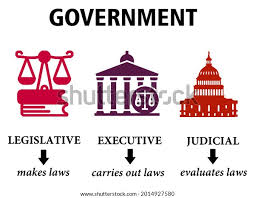
The principle of Separation of Powers is one of the most important foundations of modern democratic governments. It means that the powers of making laws, executing laws, and interpreting laws are divided among three different organs: the Legislature, the Executive, and the Judiciary. This division ensures that no single body becomes too powerful and that the functions of the government are carried out in a balanced, fair, and accountable manner. The basic idea behind this principle is that when power is concentrated in one authority, it can lead to misuse, corruption, or dictatorship. But when power is distributed, each organ can check the others and prevent any form of abuse. This creates a system where citizens’ rights and freedoms are protected, and the government works within clear legal limits.
The Legislature is the body responsible for making laws. In India, this includes the Parliament at the national level and State Legislatures at the state level. The Legislature represents the will of the people because its members are elected directly or indirectly by citizens. As society grows and changes, new problems arise, and the Legislature creates new laws or amends old ones to address these needs. For example, laws related to technology, digital payments, or environmental protection are introduced to keep pace with modern issues. Apart from making laws, the Legislature also holds the Executive accountable. It can question ministers, demand explanations, and even remove the government through a vote of no-confidence. This oversight ensures that the Executive does not misuse its authority. In essence, the Legislature acts as the voice of the people and the guardian of democratic values by ensuring that the government remains transparent and responsible.
The Executive is the branch responsible for implementing and enforcing laws. It includes the President, Prime Minister, Council of Ministers, governors, and various government departments and administrative agencies. While the Legislature creates the law, the Executive ensures that these laws are put into action in real life. For example, if the Legislature passes a law on road safety, it is the Executive that builds the infrastructure, enforces traffic rules, and manages police actions. The Executive also handles day-to-day administration, national security, foreign relations, budgeting, and welfare programmes. Its responsibility is enormous because it deals with the practical functioning of the country. However, to prevent misuse of power, the Executive is constantly monitored by both the Legislature and the Judiciary. If the Executive takes an action beyond its legal authority, the courts can review and strike it down. If it fails to act responsibly, the Legislature can question or remove its leaders. This creates a system where the Executive can function effectively but cannot act without accountability.
The Judiciary is the branch that interprets laws and delivers justice. Courts examine whether actions of the Legislature or Executive follow the Constitution and legal principles. If any law violates the Constitution, the Judiciary has the power of judicial review to declare it invalid. Similarly, if the Executive violates fundamental rights or acts unfairly, the courts can stop it and provide justice to affected citizens. The Judiciary protects the rights and freedoms of individuals by ensuring that no one, including the government, can act above the law. It also resolves disputes between individuals, organisations, and government bodies. The independence of the Judiciary is extremely important because it ensures fair and unbiased decisions. Judges must be free from political pressure, influence, or fear so that they can give judgments based solely on legal principles and justice.
The most important purpose of the Separation of Powers is to maintain a system of checks and balances. Each organ checks the power of the other two and prevents them from becoming too dominant. For example, the Legislature makes laws, but the Judiciary can review them. The Executive runs the government, but the Legislature controls its finances and policies. The Judiciary gives judgments, but judges are appointed and regulated through legal procedures involving the Executive and Legislature. This interdependence ensures both cooperation and control. It prevents concentration of power, protects citizens’ rights, and strengthens democracy. In a country like India, where diversity, population, and governance challenges are immense, the principle of Separation of Powers ensures that the government functions smoothly, laws are applied fairly, and justice is accessible to all. Overall, this principle acts as a safeguard against tyranny and ensures that democratic governance remains balanced, transparent, and accountable to the people.
Conclusion
In conclusion, understanding the meaning and purpose of law is the first and most important step for every new student entering the field of legal studies. Law is not simply a collection of rules written in books or a system used only by courts and lawyers. It is a living framework that shapes how society functions, how people interact, and how justice is maintained. When we look closely, we realise that law touches every part of human life—protecting rights, resolving disputes, guiding behaviour, and ensuring fairness. Because of this, studying law is not just about memorising sections and acts; it is about understanding how society works, how power operates, and how justice is delivered. A strong legal system helps create a safe, orderly, and peaceful society where everyone knows what their rights and responsibilities are. Without law, there would be confusion, conflict, and insecurity, but with law, there is structure, protection, and balance.
For new students, it is also important to see law as a tool that reflects the values and principles of a nation. The law expresses what a society believes in—such as equality, freedom, dignity, and justice. When a country passes laws for environmental protection, gender equality, digital safety, or consumer rights, it is not just regulating behaviour; it is shaping the moral direction of the society. The law evolves with time as new challenges and technologies emerge. This dynamic nature makes the study of law exciting and relevant, because it constantly adapts to the needs of people. Students must therefore approach law with curiosity, critical thinking, and an open mind, understanding that legal knowledge is not fixed but always expanding.
The role of law in protecting individual rights is another essential idea that students should carry forward. Rights such as the right to life, equality, freedom of speech, and protection of property give meaning to human existence. These rights ensure that every person can live with dignity and security. Law acts as a shield that prevents the government or any individual from violating these rights. The judiciary, through its power of interpretation and review, stands as a guardian of the Constitution and ensures that justice is accessible to all. When people trust that the law will protect them, they participate more actively in society and contribute positively to nation-building.
Moreover, the study of law opens doors to a variety of career paths. Beyond traditional roles such as advocates, judges, or legal advisors, law graduates can work in fields like human rights, corporate governance, public policy, social justice, international relations, and legal technology. This diversity makes law a flexible and empowering field of study. It equips students with skills like reasoning, communication, problem-solving, and ethical thinking—skills that are valuable in every profession.
Above all, law teaches us the importance of justice, fairness, and equality. As future legal professionals, students carry the responsibility of upholding these values and contributing to a just society. Whether they work in courts, offices, classrooms, or communities, their understanding of law will help them make informed decisions and positively influence others. In this way, learning what law is marks the beginning of a meaningful journey—one that combines knowledge with responsibility and empowers students to shape society in thoughtful and just ways.
You have not enough Humanizer words left. Upgrade your Surfer plan.